#16 - Pace Layering
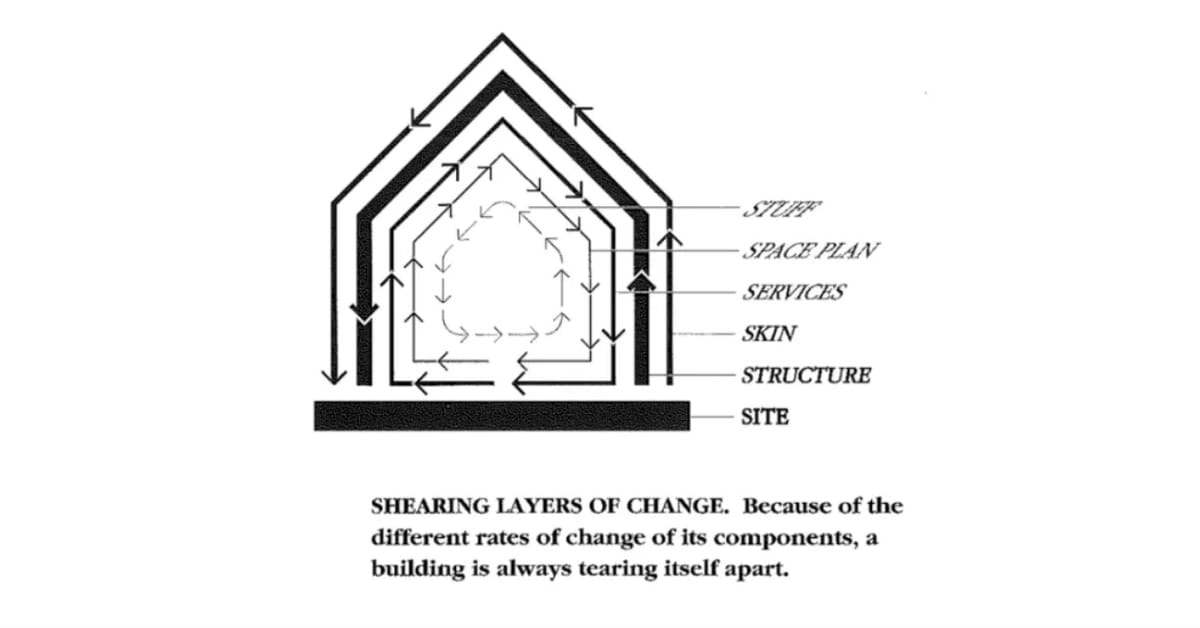
In the hum of modern business, our obsession with speed has become all-consuming. We celebrate sprints, rapid delivery and real-time reports. We’re told to move fast to keep up with the market, falling prey to the tyranny of the urgent. But as futurist Stewart Brand wisely noted, while "fast gets all the attention, slow has all the power."
This quote cuts to the heart of a profound misunderstanding in many organisations. We often treat our companies as single entities, moving at one unified speed. Preferably as fast as possible. We talk about organisational velocity as if every single part of the machine should be spinning at the same pace.
This is a fallacy. And it’s a dangerous one.
The best organisations acknowledge they don't have one speed; they have many. This is the concept of pace layering, where a system is composed of different levels, each with its own cadence.
At the top we see high visibility, high tempo layers like marketing campaigns and product releases. Below this, slower moving layers like infrastructure and long-term strategy provide stability. At the bottom lies the slowest, most powerful layer: your organisation's culture, mission and environment.
These elements evolve over decades. And their slow pace is precisely what gives them power. Slowly shaped, they largely determine the outcomes of any of the faster moving layers on top.
This is why I love Tobi Lütke's description of Shopify as a '100-year company.' That’s not nostalgia. It’s a structural choice. Culture and purpose become the slow moving, powerful structure that lets innovation keep sprinting upstairs.
The trap isn’t just pace, it’s uniformity. The real skill is mastering multiple rhythms simultaneously. To understand where to be fast and where to be patient, building power in the slow layers to unleash speed where it matters most.