#2 - In the age of AI, better writing is better thinking
Why companies with strong writing cultures will win in an AI first world
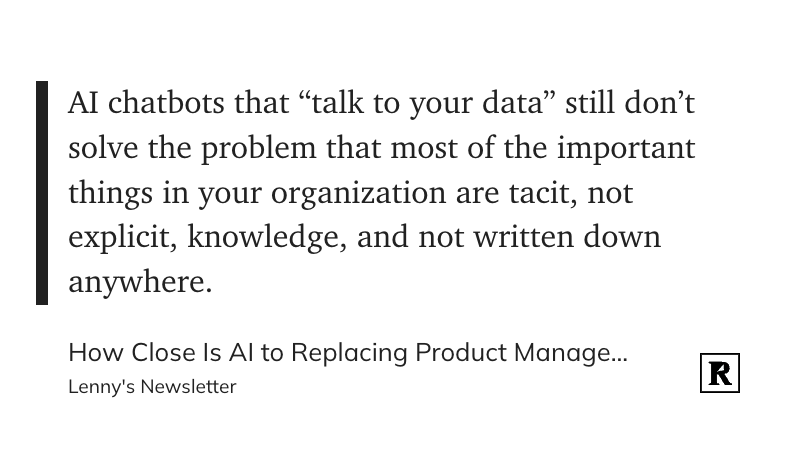
I think about this quote a lot lately. As AI is starting to show its promise to the business world, many organisations struggle to find sustainable value. Not necessarily because of bad ideas or lackluster execution, but mostly because of a shaky data-foundation it is built on.
Most organisations have weak writing cultures – arguably worse than none at all, as you can't really trust what is documented. Outliers are typically remote-first companies. They have a natural advantage here, as their structure demands explicit written communication to provide vital context to enable collaboration.
Traditionally, writing cultures have delivered two benefits:
- Enabling effective scaling of processes through easily discoverable knowledge
- Creating institutional memory that survives employee turnover
In an AI-first world a hidden third benefit comes to light: a strong writing culture lays the foundation for valuable AI. When explicitly documented context becomes AI powered software for your business to run on, it may turn out to be a source of existential competitive advantage.
Here's why: your AI cannot sustainably outperform the capabilities of your knowledge factory. The organisations seeing the greatest ROI aren't just implementing AI tools—they're doing so on a strong foundation of explicitly documented knowledge, that systematically captures nuanced business context for AI to leverage to its full potential.
The uncomfortable truth is that building a robust writing culture feels less productive and far less sexy than implementing that shiny AI solution. However, success in an AI-first world might well be a lagging indicator of a strong writing culture. If you're trying to implement AI in your business, ignore this cultural aspect at your peril.