#19 - Design for appropriation
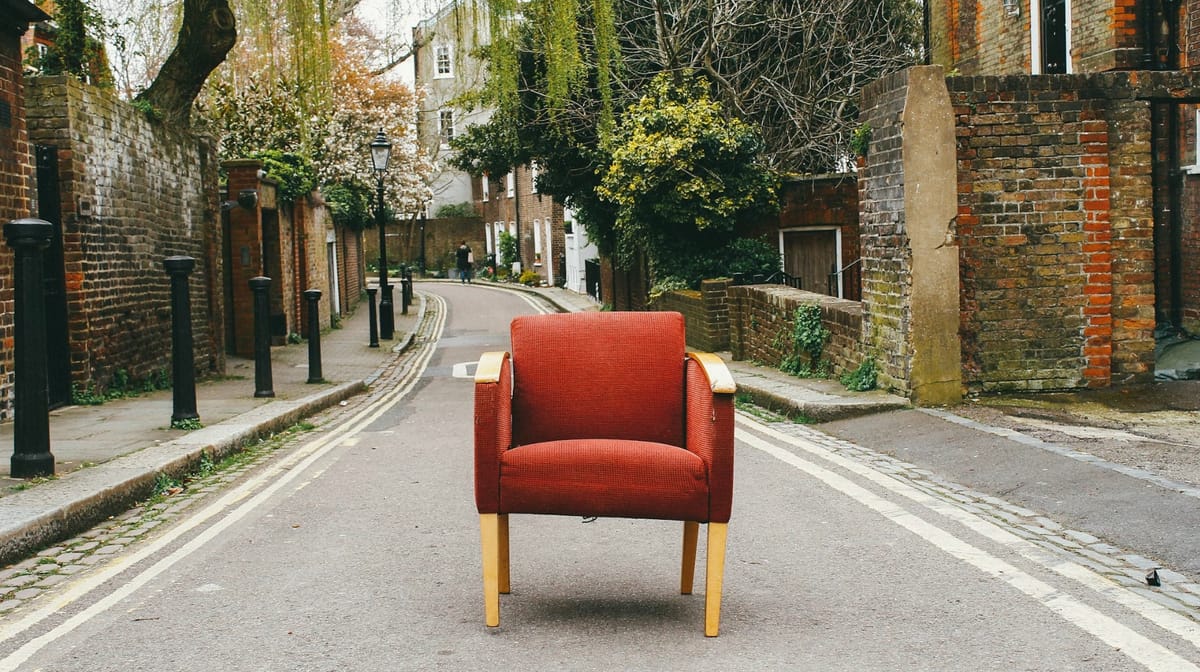
Design the chair, yes, but don't forget it sits in a room, in a house, on a street, in a city. It's what renowned architect Eliel Saarinen referred to as 'designing for the next larger context'. A reminder that while we often obsess over the 'chair', products and features, they always sit inside a workflow, a culture, a messy web of other tools and habits.
I experienced this firsthand when working with a team on open source identity technology.
Initially, Jobs-to-be-Done gave us clarity: fit the tool to the job. It pushed us to deeply understand a user's goal and build the perfect, optimised tool for that single purpose. Which works, until the context shifts.
This is where the clean edges of product design meet the chaotic contours of real life. And this is where great products make something powerful happen: appropriation. It’s not use. It’s repurposing. It’s the moment a user makes your product theirs, folds it into their system, bends it around their constraints, stretches it beyond your intent. And yes, it's scary.
It's scary because appropriation defies roadmap logic and product definitions. It doesn’t slot into a feature spec, or is neatly defined as one user story. It emerges. Slowly. Often invisibly. But it’s what makes a product stick. Not because it’s perfect, but because it’s pliable.
So we baked appropriation into our engineering DNA. Not by chasing every use case, but by explicitly leaving space for emergence. To build for the larger context of an ecosystem.
Most valued products don't just shine at their initial job; they invite unforeseen uses, letting users shape them into their messy, ever evolving workflows.
Just ask anyone who's ever used Excel, a tool never meant to run companies.
Until it did.